
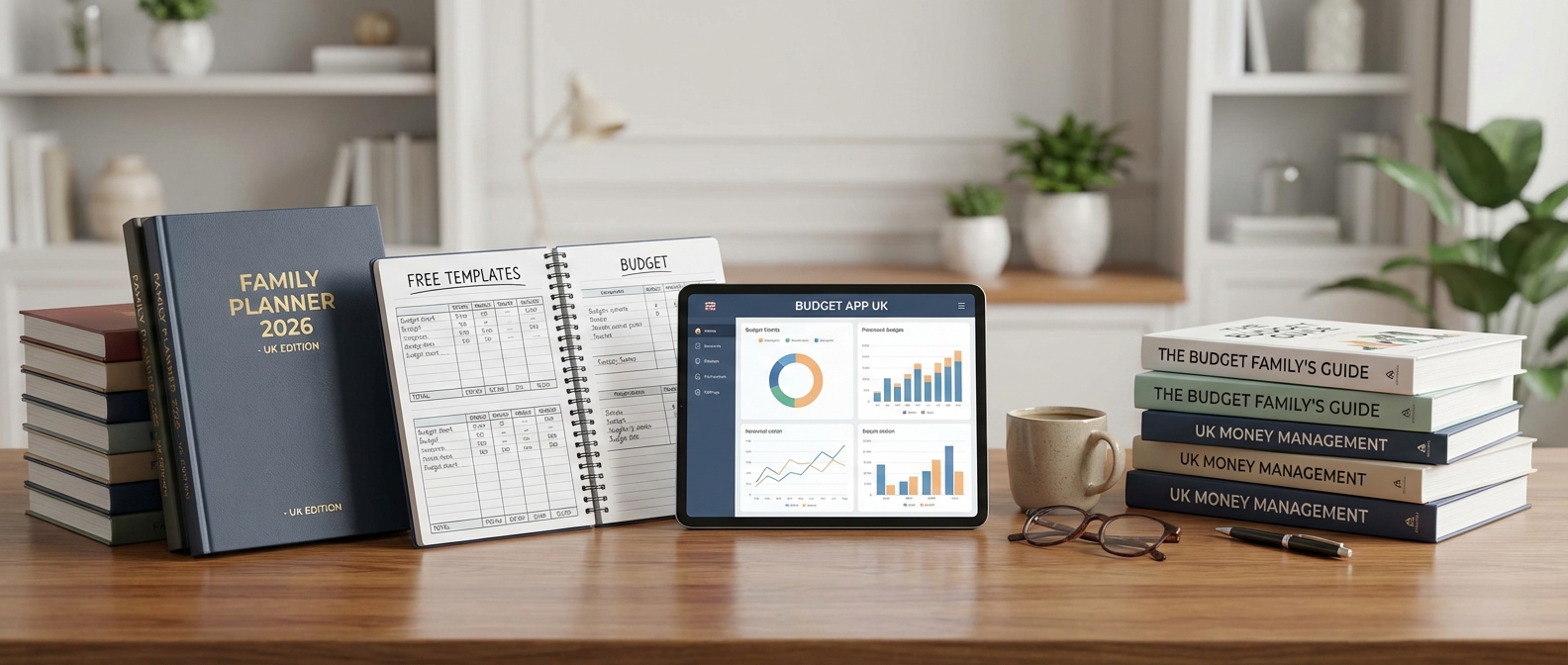
Why Every UK Household Needs a Budget Planner in 2026
Why Every UK Household Needs a Budget Planner in 2026
Every UK household needs a budget planner in 2026 to transition from survival mode to strategic growth. With the cost of living UK stabilizing but prices remaining high, a dedicated planner provides the visibility required for effective household financial management. It shifts the focus from anxiety to empowerment, allowing families to plan for future goals rather than just tracking past expenses.
Shifting from Survival to Strategy
The economic narrative has shifted. While 2024 and 2025 were defined by reactive scrambling against inflation, January 2026 offers a stabilized, albeit expensive, "new normal." A budget planner is no longer just about pinching pennies; it is the primary tool for reclaiming agency over your income.
You cannot manage what you do not measure. Without a centralized system—whether digital or analog—finances remain abstract and terrifying. A planner forces you to confront the data, turning vague worries into actionable numbers. For a comprehensive strategy on this, read The Ultimate Family Budget Planning Guide (UK): Master Your Finances in 2026.
Reducing the Mental Load
For many mothers, financial management is a constant, low-level hum of stress. Did the standing order go out? Is there enough for the school trip? This cognitive burden is exhausting.
A physical or digital planner acts as an external hard drive for your brain. By documenting cash flow, you stop carrying the weight of remembering every transaction. This externalization is critical for reducing financial anxiety. It transforms money from a source of fear into a resource you control.
The Empowerment of Visibility
The difference between a household that tracks finances and one that doesn't is the difference between steering a ship and drifting. See the comparison below:
| Feature | Reactive Household (No Planner) | Proactive Household (With Planner) |
|---|---|---|
| Spending Habits | Impulsive; driven by immediate wants. | Intentional; aligned with long-term goals. |
| Unexpected Bills | Causes panic and debt reliance. | Covered by sinking funds or emergency savings. |
| Mental State | High anxiety; fear of checking bank apps. | Confident; creates a sense of control. |
| Goal Achievement | "We can't afford a holiday." | "We travel in August because we saved £200/month." |
| Financial View | Short-term (paycheck to paycheck). | Long-term (quarterly and annual forecasting). |
Financial Clarity is Self-Care
Viewing a budget planner as a restriction is a mistake. In 2026, it is a permission slip. It tells you exactly what you can spend on guilt-free luxuries because the essentials are already covered. Whether you prefer a specialized app or a paper journal, the act of planning creates a boundary between your finances and your peace of mind.
Top Physical Budget Planners & Organisers (UK Reviews)
Top Physical Budget Planners & Organizers (UK Reviews)
For 2026, the most effective physical budget planners combine expense tracking with practical storage for paperwork. Boxclever Press remains the market leader for UK families due to its integrated receipt pockets and durable covers. Mum's Office offers superior visual layouts for those managing complex family schedules alongside finances, while undated options like Clever Fox provide flexible, goal-oriented tracking for couples focused on debt reduction.
While digital tools have their place, the tactile nature of a physical book often drives better accountability. Writing down expenses forces a moment of reflection that an auto-synced app might miss. Below, we break down the top contenders available on Amazon UK and independent British retailers this year.
Quick Comparison: Top UK Budget Planners
| Planner Brand | Best For | Key Feature | Layout Style |
|---|---|---|---|
| Boxclever Press | Busy Mums | 13 Card pockets for receipts | Monthly grids + Holiday planning |
| Mum's Office | Large Families | Grid system for multiple users | Combined Diary & Finance |
| Clever Fox | Aggressive Saving | Debt snowball trackers | Undated / Goal-Focused |
| GoGirl | Compact Carry | Portable A5 size | Simplified Expense Logs |
1. Boxclever Press Budget Book
Best For: Managing household logistics and paper clutter.
The Boxclever Press budget planner consistently ranks as the gold standard for UK households, and the 2026 edition is no exception. Its standout feature is the inclusion of 13 sturdy card pockets—one for every month plus a dedicated section for Christmas. This design solves the primary issue most organizers ignore: where to put the physical receipts and bills until you reconcile them.
- Durability: Hardback cover with a satin ribbon marker ensures it survives a year in a handbag.
- Layout: It includes sections for day-to-day spending, direct debits, and standing orders.
- Mum-Friendly Feature: The extra section for Christmas planning prevents the December budget blowout that plagues many families.
If you are looking for a dedicated financial diary 2026 that separates your money from your appointments, this is the robust choice.
2. Mum's Office MUM's Budget Book
Best For: Visual thinkers and large families.
Mum's Office takes a slightly different approach. Known for their "grid" format, their stationery appeals to parents who need to see categories side-by-side. While they are famous for their family diaries, their dedicated finance books utilize a similar logic. The paper quality is exceptionally high, reducing ink bleed-through, which is essential for color-coding enthusiasts.
- Design: Elegant, often featuring faux leather covers that look professional on a desk.
- Functionality: It places a heavy emphasis on tracking savings goals alongside expenses, making it ideal for families saving for a specific target, like a holiday or home renovation.
- Integration: For those who want everything in one place, their main family diaries often include abbreviated finance sections, though the standalone book offers deeper analysis.
For a broader look at purchasing options for these specific brands, consult our guide on Where to Buy Mom Planners Online in the UK: The Ultimate 2026 Guide.
3. Clever Fox Budget Planner (UK Edition)
Best For: Couples and debt reduction.
If you prefer an undated format that allows you to start midway through January or February without wasting pages, the Clever Fox budget organiser book is a top contender. While less "mum-centric" in styling than Boxclever, it is strictly business when it comes to debt.
- Methodology: It encourages the "envelope system" and includes specific pages for tracking debt repayment progress.
- Flexibility: Being undated, you can pause during a chaotic month without ruining the flow of the book.
- Extras: It comes with a sheet of stickers for visual motivation, which helps make the dry task of accounting slightly more engaging.
This planner is less about storing receipts and more about changing behavior. It forces you to review monthly goals and reflect on where the budget leaked, making it a powerful tool for Mastering Your Finances in 2026.
Best Overall: The All-in-One Home Organiser
Best Overall: The All-in-One Home Organiser
For 2026, the Boxclever Press Family Life Book reigns as the definitive budget family planner UK households can buy. It masterfully integrates specific financial tools—like dedicated bill trackers and Christmas budget sections—with logistical necessities like monthly storage pockets. It offers a comprehensive, tactile solution for keeping family finances and schedules in one secure location.
Managing a UK household requires more than just noting school plays and dentist appointments; it requires rigorous financial oversight. While digital calendars have their place, they often fail to capture the physical paperwork that accompanies family budgeting. This planner bridges that gap. It forces you to engage with your finances daily, creating a level of accountability that swipe-and-forget apps rarely achieve. For a broader strategy on managing household funds alongside this tool, consult The Ultimate Family Budget Planning Guide (UK): Master Your Finances in 2026.
Why It Wins on Budgeting
The standout feature of this planner is its specialized financial sections. Unlike a standard diary, it includes structured grids specifically designed for the UK market, allowing you to track Council Tax, utility bills, and subscription services month-by-month.
- Dedicated Bill Trackers: Each month features a checklist for recurring expenses. You can instantly see if the electricity bill has been paid or if the mortgage transfer is pending.
- Christmas Saving Section: The holiday season is often the biggest stressor for British families. This planner includes a designated Christmas budgeting zone to track savings goals, gift lists, and food budgets starting as early as January.
- Monthly Pockets: Every month is separated by a durable pocket. This is critical for budget management, providing a secure place to store physical receipts, unpaid invoices, or coupons before you reconcile your accounts.
Feature Comparison: All-in-One vs. Alternatives
To understand why this specific format is the best budget family planner UK option for 2026, compare its utility against standard tools:
| Feature | All-in-One Home Organizer | Standard Diary | Generic Budget App |
|---|---|---|---|
| Bill Tracking Grids | Yes (Built-in) | No | Yes (Automated) |
| Receipt Storage | Yes (Monthly Pockets) | No | No (Requires photo scan) |
| Christmas Budgeting | Yes (Dedicated Section) | No | Rarely |
| Visual Accountability | High | Low | Medium |
| Battery Required | No | No | Yes |
| Price Point | £18 - £22 | £8 - £12 | Free - £10/month |
The "Pockets" Advantage
Do not underestimate the value of the monthly pockets. In the chaos of family life, paper clutter leads to lost money. By having a designated pocket for January, you ensure that the receipt for that new school uniform or the letter regarding your tax code change is exactly where it needs to be when you sit down to balance the books. It transforms the planner from a simple calendar into a portable filing cabinet, essential for keeping a tight grip on 2026 expenses.
Best Value: Simple Cash Envelope Systems
Best Value: Simple Cash Envelope Systems
The "cash stuffing" phenomenon has transitioned from a viral UK TikTok trend to a staple financial strategy for households in 2026. This method involves withdrawing disposable income and physically allocating cash into labeled envelopes for specific categories like groceries, fuel, and sinking funds. It transforms the abstract concept of digital banking into a tangible budget family planner UK tool that forces you to stop spending once the envelope is empty.
For families trying to curb impulse buying, the psychological impact of handling physical currency is unmatched. Tapping a contactless card is painless; handing over a £20 note registers as a loss, naturally encouraging frugality. While digital apps track history, cash binders control the present.
Top Cash Binder Options for 2026
You do not need expensive equipment to start. Most UK users opt for A6 6-ring binders, which are portable enough to fit in a handbag yet large enough to hold standard banknotes without folding.
| Binder Style | Best For | Key Features | Est. Cost (UK) |
|---|---|---|---|
| Standard A6 PVC | Beginners | Clear zipper pockets, basic sticky labels, waterproof cover. | £8 – £12 |
| Custom Faux Leather | Aesthetics & Gifts | Personalized vinyl text (e.g., "Mum’s Money"), magnetic closure, card slots. | £15 – £25 |
| Savings Challenge Books | Gamification | Pre-printed "100 Envelope" challenges, wipeable trackers, heavy cardstock. | £10 – £18 |
| Hybrid Wallets | Daily Use | Integrated coin purse, card slots for fixed expenses, sections for cash categories. | £20 – £35 |
Implementing the System
To make this work, you must first determine your variable spending limits. If you are unsure how to calculate these figures, consult The Ultimate Family Budget Planning Guide (UK): Master Your Finances in 2026 to establish your baseline numbers before heading to the ATM.
Once you have your numbers, the workflow is simple:
- Categorize: Create envelopes for variable costs (Food, Petrol, Kids' Activities).
- Stuff: Fill them on payday.
- Track: Use a simple index card inside the envelope to log transactions if you need a paper trail.
- Rollover: If money remains at month's end, move it to a "Sinking Fund" envelope for larger goals like Christmas or holidays.
While you can find generic binders on Amazon, many British parents prefer supporting local creators on Etsy who offer customized designs. If you are looking for specific retailers, check our guide on Where to Buy Mom Planners Online in the UK: The Ultimate 2026 Guide for trusted shops selling high-quality binder inserts.
Best Digital Budget Family Planners & Apps
Best Digital Budget Family Planners & Apps
Digital finance tools have evolved beyond simple calculators. The best budgeting apps UK parents use in 2026 leverage Open Banking technology to sync securely with your current accounts, credit cards, and savings pots in real-time. These apps provide an immediate "financial pulse" of the household, allowing you to track joint spending, automate savings, and manage allowances for children without manual data entry.
For families debating whether to go fully digital or stick to pen and paper, our analysis of the Mom Planner vs Digital Calendar offers a detailed comparison of both workflows.
Quick Comparison: Top UK Family Finance Apps
| App Name | Best For | Cost | Key Family Feature |
|---|---|---|---|
| Snoop | Bill Monitoring & Analytics | Free (Premium: £4.99/mo) | Scans bills to find cheaper provider deals. |
| Monzo | Couples & Shared Expenses | Free (Plus/Premium vary) | Monzo shared tabs for splitting costs instantly. |
| HyperJar | Kids & Teen Independence | Free | Prepaid cards for kids with spending limits. |
| Emma | Aggressive Saving | Freemium | Syncs all accounts to track net worth. |
Snoop: The Financial Watchdog
Snoop acts less like a passive tracker and more like a proactive financial assistant. It connects to your existing bank accounts via Open Banking to analyze spending habits across the entire family. Its standout feature for 2026 is the automated bill monitor. Snoop alerts you when a subscription price hikes or when you are paying more than the market rate for utilities, ensuring your household budget doesn't leak money unnoticed.
- Why it works for families: It consolidates the financial view. If you and your partner have accounts at different banks, Snoop pulls that data into a single dashboard.
Monzo: Seamless Joint Spending
While technically a bank, Monzo functions as a premier budgeting tool. You do not need to open a full joint account to manage family expenses effectively (though their joint accounts are excellent). The Monzo shared tabs feature is a game-changer for co-parenting or shared household management. You can add specific transactions—like the weekly grocery run or school uniform purchases—to a Shared Tab, and the app calculates who owes what instantly.
- Why it works for families: It eliminates the "I paid for pizza, you paid for gas" mental math. It creates transparency without requiring a complete merger of personal finances.
HyperJar: Teaching Financial Literacy
Budgeting isn't just about the parents; it is about teaching the next generation. HyperJar for families operates on a "digital jam jar" system. You allocate money into specific jars (e.g., Groceries, Holiday, Kids' Allowance) and spend directly from them.
The app is particularly powerful for families with children aged 6 to 17. You can issue prepaid cards to your kids, allowing them to spend only what is in their jar. This gives them autonomy without the risk of overdrafts or debt.
- Why it works for families: It separates spending money from bill money. If you want a comprehensive strategy on how to allocate these funds before setting up the app, read The Ultimate Family Budget Planning Guide (UK).
Emma: The Aggregator
Emma positions itself as a "financial super app." It is ideal for families with complex financial portfolios, including investments or crypto, alongside standard checking accounts. Emma identifies wasteful subscriptions and tracks payday timings to help you avoid liquidity issues mid-month. While the free version is robust, the paid tier offers custom categories that are essential for granular family budgeting.
Automated Tracking: Apps that Sync with Your Bank
Automated Tracking: Apps that Sync with Your Bank
Automated tracking apps serve as a dynamic budget family planner UK solution by connecting directly to your bank accounts via Open Banking technology. Tools like Snoop and Emma automatically categorize every transaction in real-time, giving busy parents an instant, consolidated view of household finances without the need for manual spreadsheet entry or time-consuming receipt hoarding.
The End of Manual Entry
For many UK families in 2026, the biggest barrier to budgeting is time. Manually logging every grocery run or utility bill often leads to abandonment. Automated apps solve this by aggregating data from Barclays, Monzo, Lloyds, and other institutions into a single dashboard. This technology creates a "live" ledger. You see exactly where money leaks occur the moment they happen, rather than at the end of the month when it is too late to adjust.
If you are struggling to build a cohesive strategy, pairing these apps with a broader framework is essential. Read our guide on The Ultimate Family Budget Planning Guide (UK) to master the fundamentals before automating the process.
Top Contenders: Snoop vs. Emma
Two frontrunners dominate the UK market this year: Snoop and Emma. While both utilize bank syncing, they serve slightly different family needs.
- Snoop: Functions as a financial watchdog. It analyzes your spending history to find cheaper deals on bills (insurance, broadband, energy). It is less about strict envelope budgeting and more about spotting waste.
- Emma: Acts as a proactive financial advocate. It excels at identifying recurring subscriptions you forgot about—a common drain on family resources. Its interface is gamified, making it easier to engage reluctant partners in the budgeting conversation.
Feature Comparison: Choosing Your Digital Planner
Select the tool that aligns with your specific financial goals.
| Feature | Snoop (2026) | Emma (2026) |
|---|---|---|
| Primary Focus | Bill switching & smart spending insights | Cash flow management & subscription tracking |
| Bank Syncing | Unlimited accounts (Free tier included) | Basic sync (Free); Advanced sync (Pro) |
| Budgeting Style | Category tracking & "Snoops" (tips) | Payday budgeting & custom categories |
| Best For | Families looking to cut fixed monthly costs | Families needing strict control over daily spending |
| Cost | Free / Plus (£4.99/mo) | Free / Pro (£9.99/mo) / Ultimate |
Why Automation Matters for Families
Using an app that syncs with your bank transforms your phone into a powerful budget family planner UK. It removes the "admin" work from family finance. Instead of arguing over who forgot to log the Tesco shop, you can focus on the data presented.
- Instant Categorization: Groceries, fuel, and childcare costs are sorted automatically.
- Fraud Detection: Unusual activity across any linked account triggers an alert.
- Unified View: See credit cards, savings, and current accounts in one place.
For parents juggling multiple schedules and accounts, these apps provide the clarity required to make informed decisions quickly. If you prefer a broader digital approach to organizing family life beyond just finances, consider exploring the 15 Best Family Management Tools in the UK.
Spreadsheets: The Flexible DIY Option
Spreadsheets: The Flexible DIY Option
For families seeking a highly customizable budget family planner UK, spreadsheets offer an unparalleled level of detail and flexibility that rigid apps simply cannot match. You dictate the categories, you set the formulas, and you own the data completely. Whether you prefer the cloud-based collaboration of Google Sheets or the robust offline power of Microsoft Excel, building your own tracker allows you to pivot instantly when financial circumstances change in 2026.
While apps automate the process, spreadsheets teach you the mechanics of your cash flow. You become intimately familiar with every pound spent. To understand the methodology behind effective tracking, review The Ultimate Family Budget Planning Guide (UK): Master Your Finances in 2026.
Google Sheets vs. Microsoft Excel for Families
Choosing the right platform depends on how your family operates. Here is a quick breakdown:
| Feature | Google Sheets | Microsoft Excel |
|---|---|---|
| Cost | Free (Standard Google Account) | Paid Subscription (Microsoft 365) |
| Collaboration | Excellent real-time syncing for partners | Good (requires OneDrive setup) |
| Accessibility | Any device with a browser/app | Desktop preferred for full features |
| Best For | Couples tracking spending together | Complex forecasting & heavy data |
Why Go the Spreadsheet Route?
Spreadsheets are not just for accountants. They are powerful tools for managing domestic life.
- Total Customization: Most apps force you into predefined categories. In a spreadsheet, you can create specific columns for "Nursery Fees," "Uni Savings," or "Weekend Takeaways."
- Privacy Control: Your financial data stays on your drive, not on a third-party server used for ad targeting.
- Visual Motivation: You can generate charts to visualize debt payoff progress or savings growth.
The Momplans Digital Solution
Starting from a blank cell can be intimidating. If you want the power of Excel without the setup time, Momplans offers a dedicated digital template. We have pre-built the formulas and categories specifically for UK households, bridging the gap between a DIY spreadsheet and a polished app. It allows you to track income against fixed and variable expenses immediately.
If you find that digital tracking feels too impersonal and you crave a physical format, you might prefer a paper-based system. Check out our review of Where to Buy Mom Planners Online in the UK: The Ultimate 2026 Guide for hard-copy alternatives.
How to Create a Family Budget Plan: A Step-by-Step Guide
How to Create a Family Budget Plan: A Step-by-Step Guide
Creating a successful family budget requires calculating your total net household income and rigorously subtracting essential fixed costs to establish a clear disposable income figure. Start by auditing three months of bank statements to identify spending leaks, then allocate funds using a zero-based or 50/30/20 method to ensure savings goals are prioritized before discretionary spending occurs.
1. Calculate Your True Net Income
Most families overestimate their spending power by focusing on gross salary. You need the exact figure hitting your bank account after tax, National Insurance, and pension contributions.
In 2026, income sources extend beyond salaries. Ensure you include:
- Universal Credit or Child Benefit: Payments often change in April.
- Side Hustles: Post-tax income from freelance work or Vinted sales.
- Maintenance Payments: Any reliable incoming support.
If you are unsure about your entitlements or statutory rights this year, review our The Ultimate Motherhood Planning Guide UK (2026): Finances, Rights & Logistics to ensure you aren't leaving money on the table.
2. Compile a Monthly Outgoings List
To stop money from vanishing, you must track every penny. Pull up your banking app and review the last 90 days of transactions. This creates a realistic monthly outgoings list rather than an aspirational one.
Separate these into Fixed (Essential) and Variable (Lifestyle) costs. Be ruthless. In the UK climate, "Essentials" include Council Tax, the standing charge on your energy bill, and water rates. Streaming services and takeaways are variable.
3. Choose Your Framework
You need a system that fits your neurological style. Some parents thrive with automated apps, while others need the tactile accountability of pen and paper.
- Digital Trackers: Apps that connect via Open Banking are ideal for real-time tracking. For a breakdown of the top software options, see our 15 Best Family Management Tools in the UK: 2026 Ranked Guide.
- Spreadsheets: A family budget template in Excel or Google Sheets allows for granular customization and forecasting.
- Analogue Planners: Writing numbers down can improve memory retention and curb impulse spending.
4. Categorize Expenses (The 50/30/20 Rule UK)
A popular method to organize your finances is the 50/30/20 rule, adapted here for the current UK cost of living.
| Category | Allocation | UK Specific Examples | Action Item |
|---|---|---|---|
| Needs | 50% | Mortgage/Rent, Council Tax, Energy (Gas/Elec), Food Shop, Transport. | Negotiate: Check comparison sites for broadband and insurance renewals. |
| Wants | 30% | Dining out, Sky/Netflix, Gym memberships, Kids' clubs, Holidays. | Audit: Cancel unused subscriptions immediately. |
| Savings | 20% | ISA contributions, Emergency Fund, Debt Repayment (Credit Cards/Loans). | Automate: Set up standing orders for payday. |
5. Adjust for the UK Tax Year 2026
A static budget fails. You must anticipate the "April Shock." The UK tax year 2026 brings annual price hikes to mobile contracts (often CPI + 3.9%) and changes to Council Tax bands.
Review your plan quarterly. If your "Needs" category exceeds 50% due to rising energy caps or mortgage rates, you must aggressively cut from the "Wants" column. For a deeper dive into managing these shifts specifically, read The Ultimate Family Budget Planning Guide (UK): Master Your Finances in 2026. Consistency beats perfection; the goal is control, not deprivation.
Step 1: Audit Your Fixed vs. Variable UK Bills
Step 1: Audit Your Fixed vs. Variable UK Bills
To build an effective budget family planner UK system, you must first distinguish between non-negotiable obligations and lifestyle choices. Fixed expenses remain constant month-to-month, while variable costs fluctuate based on consumption. Auditing these categories reveals exactly how much disposable income remains after survival costs are met.
Fixed costs are the bedrock of your financial architecture. These include your mortgage or rent, Council Tax, and broadband contracts. They are predictable and typically leave your account via Direct Debit on a set date. While harder to reduce immediately, they provide stability.
Variable costs are where your budget lives or dies. These expenses—groceries, energy bills, and fuel—change based on behavior. This is the primary target area for any family looking to save money in 2026. For a broader look at structuring your household finances, refer to The Ultimate Family Budget Planning Guide (UK).
Categorizing Your Outflows
Use the table below to sort your last three months of bank statements.
| Expense Category | Typical UK Examples | Audit Strategy |
|---|---|---|
| Fixed Costs | Mortgage/Rent, Council Tax, TV License, Insurance, Broadband | Review Contracts: Can you switch broadband providers or remortgage? These are annual checks. |
| Variable Costs | Groceries (Tesco/Aldi), Energy (Gas/Electric), Transport/Fuel, Entertainment | Track Weekly: These require active management. Set hard limits for these categories. |
| Periodic Costs | Car MOT/Service, Christmas, School Uniforms | Sinking Funds: Save a small amount monthly to cover these inevitable spikes. |
The Direct Debit Purge
The quickest way to free up cash is a ruthless review of your automated payments. "Zombie subscriptions" often drain UK family budgets unnoticed.
- Log into your banking app. Filter by "Direct Debits" and "Standing Orders."
- Identify the non-essentials. Look for gym memberships unused since 2025, streaming services with overlapping libraries, or trial subscriptions you forgot to cancel.
- Cancel immediately. If it doesn't serve your family's current goals, cut it.
Once you have clarity on your fixed obligations versus your variable spending, you can choose the right tool to manage them. Whether you prefer digital apps or paper solutions, knowing your numbers is the prerequisite for success.
Step 2: Planning for 'Lumpy' Expenses (Christmas & Holidays)
Step 2: Planning for 'Lumpy' Expenses (Christmas & Holidays)
Sinking funds act as a financial shock absorber for your household by converting predictable, large annual costs into manageable monthly payments. Rather than scrambling to find £800 in December, a robust budget family planner UK strategy dictates saving roughly £67 monthly starting in January, effectively flattening a massive financial spike into a smooth, predictable line.
Most families fail to budget for these "lumpy" expenses because they do not occur monthly. However, in the UK, three specific periods consistently drain family accounts. To master your finances in 2026, you must treat these events as monthly bills, not surprise emergencies.
For a comprehensive breakdown of structuring these accounts alongside your daily spending, refer to The Ultimate Family Budget Planning Guide (UK): Master Your Finances in 2026.
The "Big Three" UK Sinking Funds
Identify these costs early in the year to prevent credit card reliance.
- The Summer Holidays (July/August): The six-week school break is the most expensive period for parents. You must account for increased childcare costs, camps, family vacations, and daily entertainment.
- Back to School (August/September): Uniforms in the UK are costly. Blazers, branded PE kits, and durable school shoes add up quickly.
- Christmas (December): Beyond gifts, budget for higher food bills, travel costs to visit relatives, and social events.
2026 Sinking Fund Calculator
The following table illustrates how to break down these costs. These figures represent average estimates for a family of four in the UK. Adjust the "Total Goal" based on your specific financial reality.
| Expense Category | Typical Due Date | Est. Total Goal (£) | Monthly Savings Needed (Jan Start) | Monthly Savings Needed (April Start) |
|---|---|---|---|---|
| Summer Holidays | July 1st | £1,200 | £200 / mo | £400 / mo |
| Back to School | August 15th | £400 | £50 / mo | £80 / mo |
| Christmas | November 1st | £800 | £73 / mo | £100 / mo |
| Annual Car Ins. | Renewal Date | £600 | £50 / mo | Varies |
| TOTAL | -- | £3,000 | £373 / mo | £580+ / mo |
Note: Starting in January significantly lowers the monthly burden. If you are starting late, prioritize the most imminent expense.
Implementation Strategy
Do not keep this money in your current account. It will get absorbed into grocery or utility spending.
- Use "Pots" or "Spaces": UK digital banks like Monzo or Starling allow you to segregate money within a single account. Label them clearly (e.g., "Xmas 2026").
- Automate Transfers: Schedule transfers to these pots to occur on payday.
- Track in Your Planner: Whether you use a digital app or a paper journal, record the growing balance of these funds monthly. Seeing the pot grow provides psychological momentum and reduces financial anxiety.
If you struggle to balance these savings with daily scheduling, you might benefit from a tool that combines logistics with finance. Check out our review of the 12 Best Personalized Mom Organizers in the UK (2026 Reviewed) – Taming the Chaos to find a format that supports sinking fund tracking.
Step 3: The 'Sunday Reset' Routine
Step 3: The "Sunday Reset" Routine
Buying the best budget family planner UK parents recommend is only the first step; consistent execution is what actually saves you money. The "Sunday Reset" is a non-negotiable, 15-minute weekly ritual where you reconcile receipts, update trackers, and forecast the upcoming week's expenses to prevent accidental overspending. Without this short audit, your planner becomes nothing more than a notebook gathering dust.
Treat this time as a sacred appointment with your bank account. Pour a coffee, sit in a quiet corner, and open your planner. You aren't just logging numbers; you are regaining control. This brief check-in prevents the "end-of-month panic" by catching varied spending leaks before they drain your account.
The 15-Minute Financial Breakdown
Efficiency is key. You do not need hours to manage household finances effectively. Use this structured timeline to maximize your Sunday Reset:
| Time Allocation | Action Item | Objective |
|---|---|---|
| Minutes 0-5 | Gather & Categorize | Collect all physical receipts and open banking apps. Sort transactions into "Fixed" (bills) and "Variable" (groceries, leisure). |
| Minutes 5-10 | Log & Reconcile | Input data into your planner. Compare actual spending against the budget you set last week. |
| Minutes 10-15 | Forecast & Adjust | Look at the week ahead. Note upcoming irregular costs (school trips, birthdays) and adjust category limits accordingly. |
Making the Ritual Stick
Willpower is a finite resource, but habits are automatic. To ensure your budget family planner UK strategy succeeds in 2026, attach this financial review to an existing habit. Do it immediately after the weekly grocery shop or right before you plan the week's meals.
During this session, focus on these three critical checkpoints:
- Identify Variance: Did you spend £50 more on groceries than planned? Don't panic. Simply subtract that £50 from next week's dining-out budget. Immediate correction is better than end-of-month debt.
- Audit Subscriptions: Scan your transaction list for recurring charges you forgot about. This is often where digital tools shine. If you are struggling to choose between paper and apps for this specific task, read our comparison on Mom Planner vs Digital Calendar: The Ultimate Showdown for UK Mums (2026 Edition).
- Celebrate Small Wins: Did you come in under budget on utilities? Highlight it. Visualizing progress motivates you to stick with the process.
For a comprehensive strategy on how to allocate these funds once you've tracked them, refer to The Ultimate Family Budget Planning Guide (UK): Master Your Finances in 2026. This routine ensures your planner serves you, rather than becoming another item on your to-do list.
Free vs. Paid: Which Planner Suits Your Style?
Deciding between free and paid planning tools comes down to your cognitive workflow rather than just your budget. Tactile planners suit those who need physical writing to retain information, while digital natives often prefer the automation of apps. For total customization without the price tag, a printable template bridges the gap between structure and flexibility.
Comparison: Physical Books vs. Apps vs. Printables
| Feature | Paid Physical Book | Free App (Basic) | Free Printable |
|---|---|---|---|
| Average Cost | £10 – £25 | £0 (Freemium models) | Cost of paper/ink |
| Best For | Tactile learners & memory retention | Tech-savvy parents & automation | DIY organizers & customization |
| Primary Benefit | Reduces screen time; better focus. | Auto-calculations & mobile access. | Flexible structure; low commitment. |
| Main Drawback | Fixed layout; cannot edit errors. | Privacy concerns; hidden paywalls. | Requires assembly; loose papers. |
The Case for the £15 Physical Planner
Investing in a high-quality physical book is often less about the paper and more about the psychological commitment. When you purchase a planner, the "sunk cost" motivates you to use it. Furthermore, the act of writing by hand engages the brain's reticular activating system, making you more likely to remember your spending limits.
If you struggle with digital distractions, a physical book offers a quiet, focused space to manage your household economy. However, you are locked into the publisher's layout. If you need to know where to find the best options, check our guide on Where to Buy Mom Planners Online in the UK: The Ultimate 2026 Guide.
The Tech Approach: Free Apps
For parents who need real-time data, free apps are superior. They handle the math for you, categorize transactions automatically, and sync across devices so partners stay on the same page. This is the realm of efficiency.
However, "free" often comes with caveats. Many free apps restrict essential features—like connecting bank accounts or exporting data—reserving them for paid budgeting tools. Additionally, reliance on an app keeps you tethered to your phone, which can blur the lines between family management and doom-scrolling. For a deeper dive into digital organization, read our analysis on Mom Planner vs Digital Calendar: The Ultimate Showdown for UK Mums (2026 Edition).
The Hybrid Solution: Free Printables
The free budget planner printable is the ultimate middle ground. It allows you to build a bespoke binder that fits your specific financial situation without the upfront cost of a hardbound book. You can print only the pages you need—whether that is a debt tracker, a meal plan, or a monthly spread.
This method requires more setup time (printing, hole-punching, organizing), but it offers unmatched flexibility. You can test different layouts to see what works before committing. If you are ready to build a comprehensive system, start with the strategies outlined in The Ultimate Family Budget Planning Guide (UK): Master Your Finances in 2026.
Download Your Free 2026 Momplans Budget Sheet
Download Your Free 2026 Momplans Budget Sheet
Stop wrestling with generic spreadsheets that require manual currency conversion or ignore UK-specific expenses. We engineered a proprietary printable budget sheet UK families can use immediately to regain financial control. This tool is pre-formatted for 2026 tax rates, energy cap adjustments, and GBP calculations, ensuring you track every penny with precision.
Click the link below to access your free download. This resource is available as both a dynamic Google Sheet (for auto-calculations) and a high-resolution PDF for those who prefer pen-and-paper tracking.
What’s Inside the Momplans 2026 Tracker?
We stripped away the complexity found in standard accounting software to focus on what matters for household management.
| Section | Function | UK Context |
|---|---|---|
| Income Aggregator | Tracks varying income streams. | Includes rows for Child Benefit, Universal Credit, and PAYE variations. |
| Fixed Outgoings | Logs non-negotiable bills. | Pre-filled categories for Council Tax, TV License, and Energy Direct Debits. |
| Sinking Funds | Plans for irregular expenses. | dedicated columns for MOT, Christmas, and School Uniforms. |
| "The Gap" Calculator | Auto-calculates remaining funds. | Instantly shows disposable income in £ after all essentials are covered. |
Why This Template Works
Managing a household requires more than just listing expenses; it requires a system.
- Zero-Based Budgeting Ready: Every pound is assigned a job before the month begins.
- Visual Debt Tracker: Watch your balances decrease with a built-in "Snowball" visualizer.
- Mobile Optimized: The Google Sheet version is formatted to be readable on mobile devices for on-the-go entry.
For a deeper dive into the methodology behind this template, read our Family Budget Planning Guide (UK). It explains how to interpret the data this sheet generates to make smarter decisions in 2026.
[>> CLICK HERE TO DOWNLOAD YOUR 2026 BUDGET SHEET <<]
Note: No email required. This is a direct download link.
Conclusion: Taking Control of Your Family Finances
Conclusion: Taking Control of Your Family Finances
Financial freedom starts with a single decision: to track where your money goes. Finding the right budget family planner UK option is simply the vehicle for that journey. Whether you choose a sophisticated app, a dedicated budget book, or a free Excel template, the "best" planner is ultimately the one you actually open every day.
To help you finalize your decision, here is a quick summary of which format suits different family needs:
| Planner Type | Best For | Primary Benefit |
|---|---|---|
| Mobile Apps | Tech-savvy parents needing real-time syncing. | Automation and bank integration. |
| Physical Books | Visual learners who prefer writing things down. | Tangible accountability and zero distractions. |
| Digital Templates | Excel/Sheets users wanting total customization. | Flexibility to manipulate data and forecast. |
Success relies on habit, not hardware. A £5 notebook used daily is infinitely more valuable than a £50 subscription you ignore after a week. If you find yourself struggling to organize the rest of your household logistics alongside your finances, you may want to review our ranking of the 15 Best Family Management Tools in the UK to streamline your entire routine.
Action Steps for Today:
- Pick one method. Do not overthink it. Analysis paralysis costs you money.
- Set a time. Dedicate 10 minutes every Sunday to review the past week.
- Start immediately. Do not wait for the start of the next month. Today is the best day to begin.
For those ready to move beyond simple tracking and build a robust financial roadmap for 2026, read our full analysis in The Ultimate Family Budget Planning Guide (UK). Take control of your wallet, and you take control of your future.